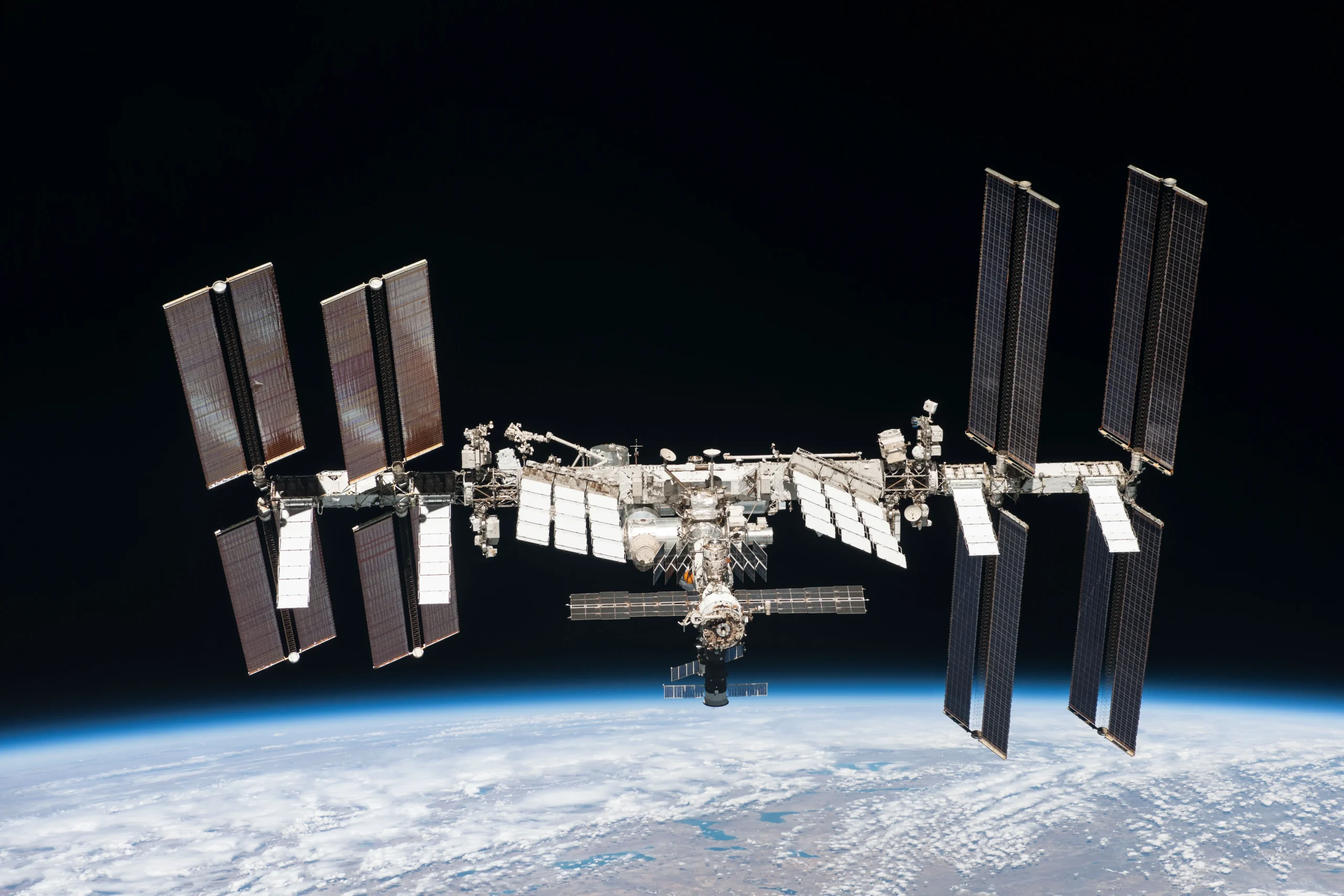
The surprising answer: it is falling.
The International Space Station orbits roughly 400 km above Earth.
At that height, gravity is still pulling on it.
So why doesn’t the ISS simply fall out of the sky?
Because it is moving sideways incredibly fast—about 28,000 km/h.
And that creates one of the strangest ideas in spaceflight:
The ISS is constantly falling toward Earth, but it keeps missing the ground.
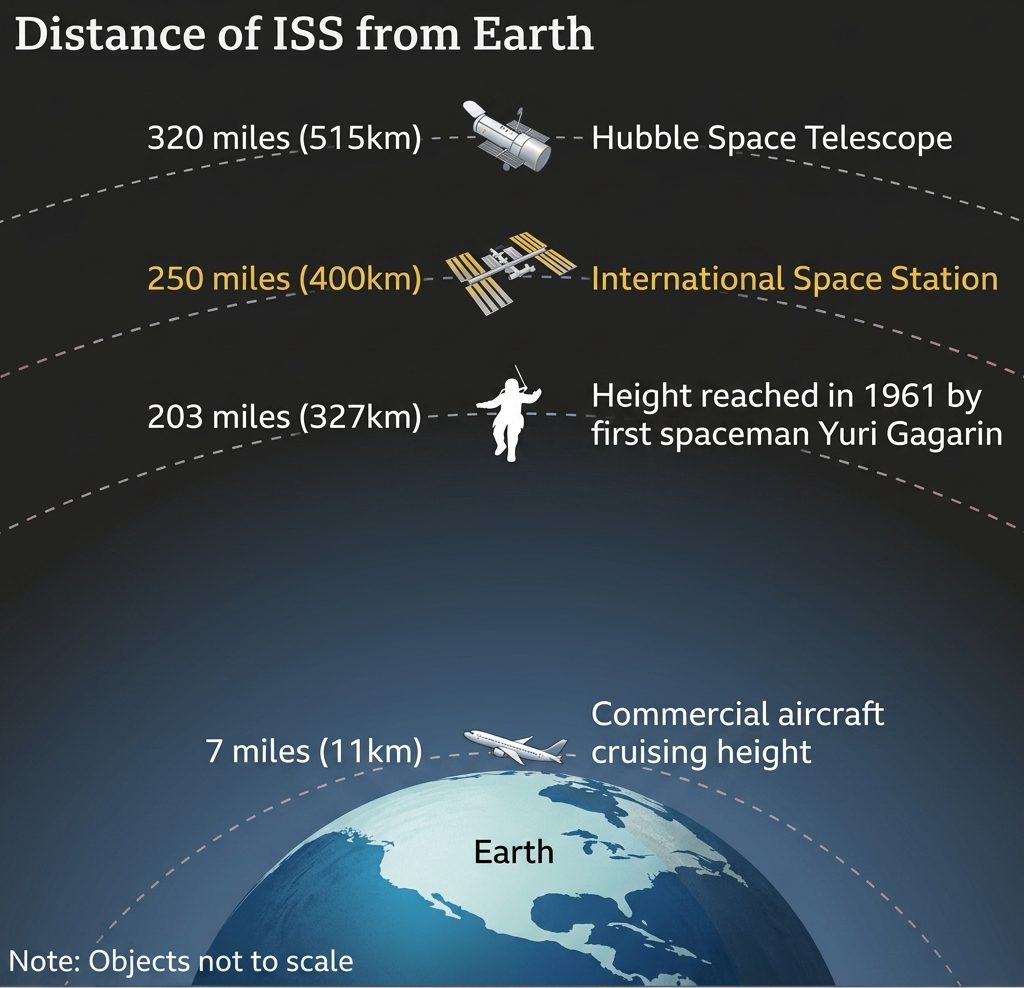
01 — GRAVITY NEVER LETS GO
The ISS isn’t floating because gravity disappears.
Earth’s gravity is constantly pulling the station toward the planet.
The same gravity that makes a dropped ball fall is also what keeps the ISS in orbit.
The difference is that the ISS is moving sideways so quickly that its path curves around Earth.
GRAVITY (↓) + SPEED (→) = ORBIT (↘)
┌─────────────────────────────────────────┐
🛰️ moves forward →
↓ gravity pulls down
↘ path curves
↓ 🌍 Earth curves away too
Result: continuous free fall = orbit
└─────────────────────────────────────────┘
02 — THE CANNONBALL EXPERIMENT
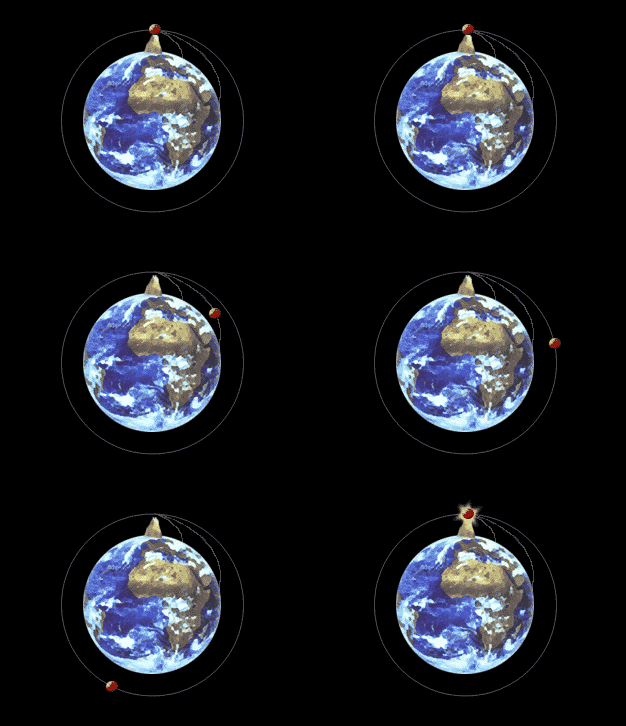
Centuries ago, Isaac Newton imagined a cannon on top of a very high mountain.
Imagine firing a cannonball.
Slow → it falls nearby.
Faster → it travels farther before hitting Earth.
Much faster → it travels so far that Earth’s surface curves away beneath it.
At the right speed, the cannonball keeps falling toward Earth while the ground keeps curving away.
It never stops falling. It simply keeps missing Earth.
03 — SO, IS THE ISS REALLY FALLING?
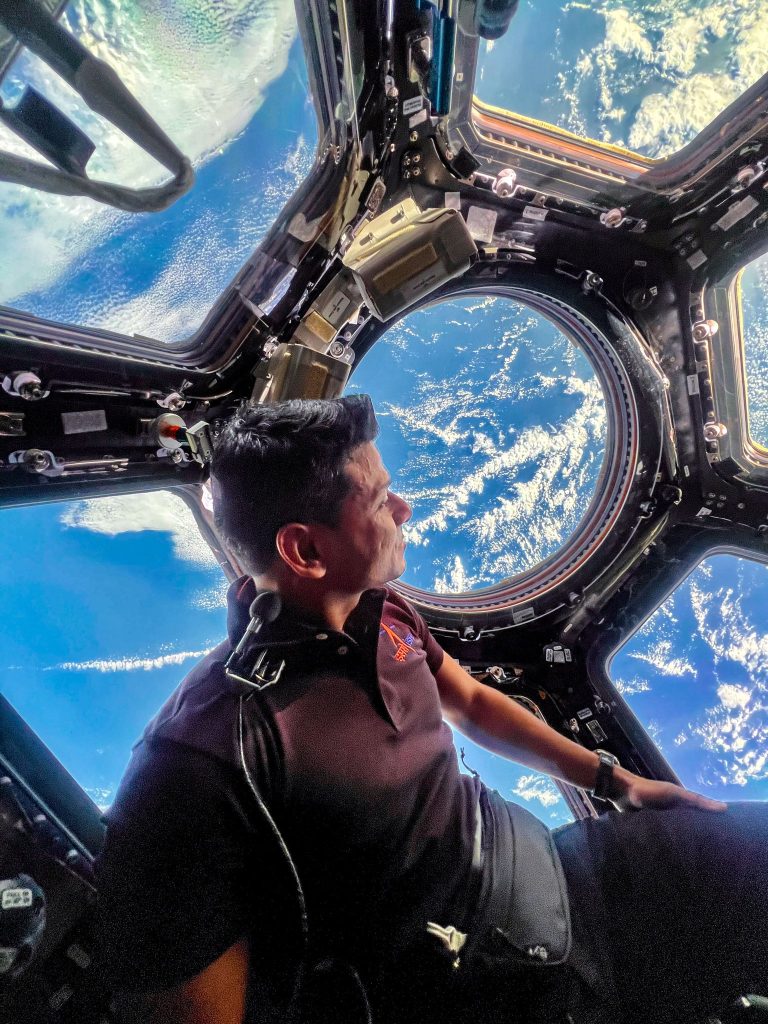
Indian astronaut Shubhanshu Shukla viewing Earth from International Space Station’s Cupola module.
Yes.
The ISS and everything inside it are continuously falling toward Earth.
But they’re moving together.
That’s why astronauts appear weightless.
They aren’t beyond gravity.
They’re experiencing continuous free fall around Earth.
Falling + Forward Motion = Orbit
04 — BUT IT DOES SLOW DOWN

Here’s the catch.
Space around the ISS isn’t completely empty.
At roughly 400 km altitude, there are still tiny amounts of atmosphere.
That thin atmosphere creates drag, which slowly removes energy from the ISS’s orbit.
So without occasional corrections, the station would gradually lose altitude.
REBOOST
Visiting spacecraft or the station’s propulsion systems periodically provide a boost.
That adds energy back to the orbit and raises the ISS again.
Drag ↓ → Altitude ↓
Reboost ↑ → Orbit restored
🌍 THE WOW
90 MINUTES
That’s all it takes for the ISS to travel once around Earth.
And in a single day, astronauts can see approximately:
16 SUNRISES
16 SUNSETS
while travelling at roughly:
Leave a Reply