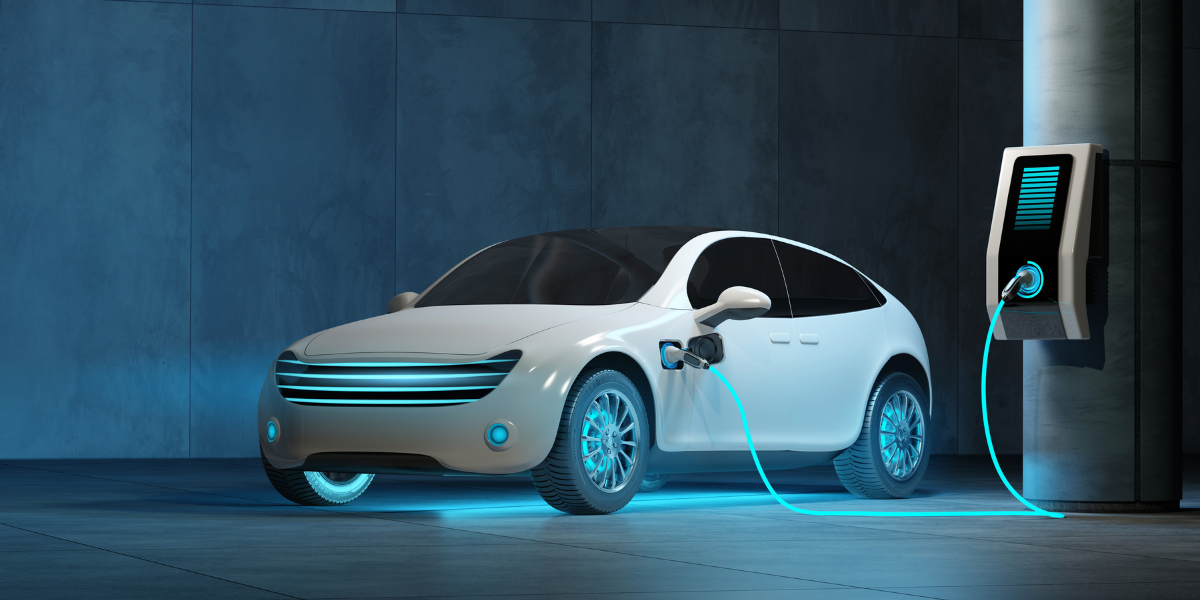
The simple answer: instant torque.
You press the accelerator and an electric car responds almost immediately. Unlike a petrol engine, an electric motor can produce strong torque from very low speeds.
1] How does that power reach the road?
Battery → Inverter → Electric Motor → Wheels
The battery supplies electricity. The inverter controls it. The motor turns that electrical energy into motion, and that motion reaches the wheels.
2] The secret is torque
Torque is the twisting force that turns the wheels.
An electric motor can deliver substantial torque almost instantly:
Low speed → High torque → Fast response
That’s why an EV can feel so quick the moment you press the pedal.
3] No Traditional Gear Shifts
Most electric cars don’t need the multi-speed transmission used by conventional petrol cars.
An electric motor can operate effectively across a wide range of speeds, so power can be delivered through a single-speed reduction gear.
That means:
No gear changes → No shift delay → Smooth, immediate power
PETROL ENGINE
Narrow useful speed range
↓
Multiple gears needed
↓
Smooth acceleration
ELECTRIC MOTOR
Wide useful speed range
↓
Single-speed gear
↓
Immediate, smooth power
THE MINUTE
Electric cars accelerate quickly because their motors can deliver strong torque almost instantly, while sophisticated electronics control how that power reaches the road.
Electricity → Torque → Traction → Motion
MACHINE MINUTE
Machines, made interesting.
ROCKET MINUTE
Stories from Speed to Light.
Leave a Reply