
SpaceX-inspired thrusters, a car that can drive upside down and a claimed 0–60 mph (approximately 97 km/h) time of less than one second. Tesla’s long-awaited Roadster is finally back — and it is unlike anything we’ve seen from the company before.
01 — THE ROADSTER RETURNS
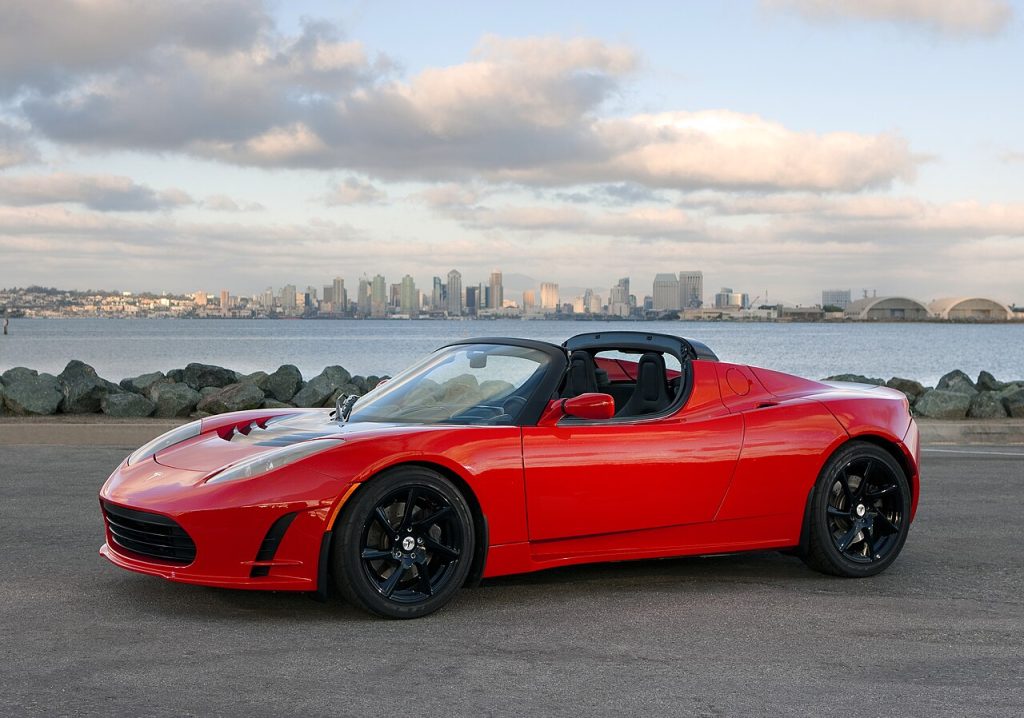
After years of anticipation, Tesla has finally brought its next-generation Roadster into the spotlight.
Unveiled at SpaceX’s facility in McGregor, Texas, on October 15, 2026, the redesigned prototype looks dramatically different from the original concept first introduced in 2017.
Its low-slung stance, sharp wedge-shaped profile and sculpted body give it the appearance of a conventional electric supercar. But beneath that dramatic design sits something far more ambitious.
Tesla isn’t simply trying to build another fast electric car. It wants to bring ideas from aerospace engineering onto the road.
And that is where things get interesting.
02 — AERODYNAMICS THAT ADAPT
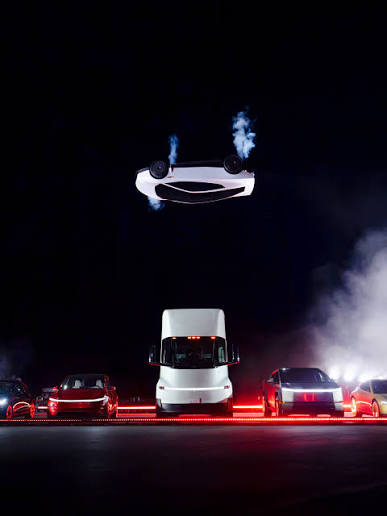
At high speeds, air becomes much more than something a car moves through. It becomes a force engineers must carefully manage.
The Roadster uses active aerodynamic technology designed to adapt to driving conditions. Its movable aerodynamic elements work alongside the underbody suction system to help generate downforce and improve stability.
The idea is simple: rather than relying on fixed aerodynamic surfaces, the car can adjust how it interacts with airflow.
This matters because more downforce can help keep tyres pressed against the road, improving grip. But aerodynamic performance is always a balancing act between stability and drag.
The Roadster’s approach combines conventional aerodynamic thinking with a much more unusual suction system.
03 — DEFYING GRAVITY
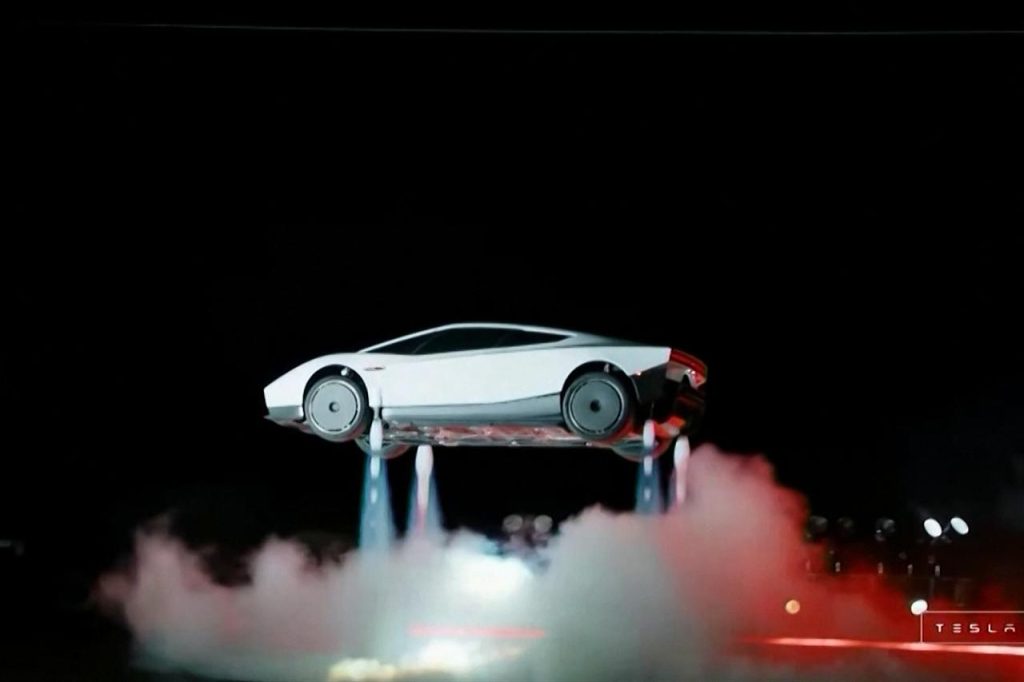
One of the Roadster’s most unusual features is its powered underbody suction system.
Instead of relying only on conventional aerodynamic surfaces to generate downforce, the system uses fans and a specially designed underbody to pull air out from beneath the car. This creates a powerful suction effect that presses the vehicle towards the surface.
Tesla says the system can generate enough force to hold the Roadster upside down — even when stationary.
But the real spectacle comes from its SpaceX-inspired cold-gas thrusters.
These use pressurised gas to produce short bursts of thrust, allowing the car to perform brief, controlled airborne manoeuvres. During the showcase, the technology helped the prototype demonstrate movements that look more like something from a science-fiction film than a traditional automotive launch.
Tesla also claims the Roadster can accelerate from 0 to 60 mph in less than one second with its thruster-assisted setup.
That’s an extraordinary number. But it remains a manufacturer claim, not an independently verified production-car performance figure.
04 — A COCKPIT FROM THE FUTURE

The Roadster’s ambition isn’t limited to what happens outside the car.
Tesla has also highlighted a steer-by-wire control system, moving away from the traditional mechanical connection between the steering wheel and the front wheels.
In a steer-by-wire setup, electronic signals communicate the driver’s steering inputs to the vehicle’s steering system. This gives engineers greater flexibility over steering response and vehicle packaging.
The Roadster is also designed around electronic brake and throttle controls, creating a cockpit that reflects its technology-led approach.
Lightweight materials, including carbon fibre, titanium and magnesium, are part of the wider engineering package.
The result is a car that aims to rethink not just how a sports car moves, but how the driver interacts with it.
05 — THREE EXTREMES
Tesla plans to offer the Roadster in three distinct configurations, each taking the concept further. The biggest difference between them is the addition of cold-gas thrusters — and how many each version gets.
PERFORMANCE — THE ROAD-READY VERSION
The Performance configuration is the entry point into the Roadster range. It features two seats, active aerodynamics and a multi-mode suction system designed to generate downforce and improve grip.
Unlike the other configurations, Performance does not include cold-gas thrusters. It focuses on delivering extreme performance through its electric powertrain and aerodynamic technology.
THRUST — FOUR REAR THRUSTERS
The limited-release Thrust version takes things a step further by adding four cold-gas thrusters mounted at the rear of the car.
These thrusters use bursts of pressurised gas to deliver additional forward thrust, supporting Tesla’s extraordinary acceleration claim of 0–60 mph in under one second.
It retains the two-seat layout and combines the thrusters with the multi-mode suction system.
ROCKET — TEN THRUSTERS, ONE SEAT
At the top sits the invite-only Rocket configuration, featuring ten cold-gas thrusters positioned around the vehicle.
It retains the four rear-facing thrusters and adds six more: four directed downwards to help lift and control the car, and two positioned at the sides to support lateral and rotational movement.
The additional hardware also means the Rocket version has a single-seat layout, making room for its larger compressed-gas storage system.
This is the most extreme Roadster configuration, designed to demonstrate brief, controlled airborne manoeuvres. Tesla says it is not approved for public-road use.
Three versions. Four or ten thrusters — or none. And a very different idea of what an electric sports car can be.
06 — THE ROAD AHEAD
Tesla is targeting a production rollout in 2028. But the prototype showcase is only one step towards making that happen.
There are still major questions surrounding the final production specifications, real-world performance, pricing and delivery timeline. The extraordinary acceleration claim and the more experimental thruster technology will also need to move beyond demonstrations and into a dependable, production-ready package.
The challenge is not simply making the Roadster perform these tricks once. It is engineering a vehicle that can do so safely, reliably and within the requirements of the markets where it will be sold.
For now, the Roadster remains a glimpse of what Tesla wants the future of performance cars to look like.
THE BIG QUESTION
Can aerospace-inspired technology make its way into a practical production sports car?
The original Roadster helped show that electric cars could be exciting. Its successor wants to take that idea much further.
With active aerodynamics, an underbody suction system, steer-by-wire controls and rocket-inspired thrusters, Tesla is attempting to blur the line between automotive and aerospace engineering.
Whether all of its most ambitious promises make it into the final production car remains to be seen.
But one thing is certain: the Roadster has made its return impossible to ignore.
THE SECOND
What’s New. Right Now.
ROCKET MINUTE
Stories from Speed to Light.
Leave a Reply